



Meta Description: Compare diamond size, carat weight, settings, clasps and fit before choosing a lab grown diamond tennis bracelet for everyday wear.
A tennis bracelet may look simple, but its quality depends on dozens of small decisions. Every diamond must sit neatly beside the next, the links need to move comfortably, and the clasp must remain secure throughout the day.
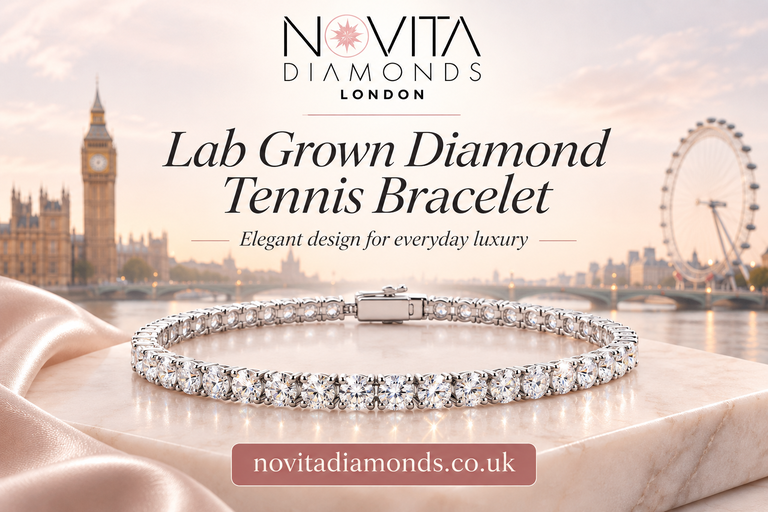
A lab grown diamond tennis bracelet offers the appearance and physical properties of natural diamond jewellery, often at a lower price than a comparable mined-diamond design. Yet carat weight alone cannot tell you how well the bracelet will look or wear.
The difference becomes clearer when you examine the individual stones, their settings and the way the bracelet is constructed.
Why Diamond Consistency Matters Across the Wrist
A solitaire ring draws attention to one gemstone. A tennis bracelet creates its appearance through repetition, with each diamond contributing to a continuous line of light. That makes consistency particularly important.
If neighbouring stones differ noticeably in diameter, colour or brilliance, the bracelet may appear uneven. Small differences become easier to spot because the diamonds sit directly beside one another.
Round brilliant diamonds are a familiar choice because their faceting produces lively reflections. Oval, emerald-cut and princess-cut stones offer different appearances, although their proportions and orientation require careful matching.
Emerald-cut diamonds, for example, have broad facets that create distinct flashes of light rather than the smaller reflections associated with round brilliant stones.
When comparing bracelets, look closely at the complete row rather than focusing on a single attractive diamond.
Total Carat Weight Can Be Misleading
Bracelets are commonly described by their total carat weight, sometimes abbreviated as TCW or CTW. This represents the combined weight of the diamonds rather than the weight of an individual stone.
Two bracelets with the same total diamond weight can look surprisingly different.
A design containing many small diamonds may create a delicate, closely spaced line. Another with fewer, larger stones can appear wider and more prominent on the wrist.
The distribution of diamond weight matters alongside the overall figure.
For everyday jewellery, smaller stones may offer a comfortable balance between visible sparkle and a restrained profile. Larger diamonds create a stronger visual effect but generally require wider settings and additional metal.
Buyers should compare diamond diameter, stone count and bracelet length alongside carat weight.
The terminology surrounding diamond origin also deserves attention. UK retailers such as Novita Diamonds provide information about lab made diamonds, which are genuine laboratory-grown diamonds rather than imitation stones such as cubic zirconia.
According to the Gemological Institute of America (GIA), laboratory-grown and natural diamonds have essentially the same chemical, physical and optical properties. Their main distinction is how they form.
The Setting Changes Both Appearance and Practicality
The metal surrounding each diamond influences how much of the stone remains visible and how securely it is held.
Claw Settings
Claw settings, also called prong settings, use small metal projections to hold each diamond.
They create an open appearance, allowing much of the stone to remain visible. However, exposed claws can catch on knitted clothing or become worn over time.
Well-finished claws should feel smooth and hold the diamonds firmly without unnecessary bulk.
Bezel Settings
A bezel setting surrounds each diamond with a narrow metal rim.
This offers protection around the stone’s edge and creates a cleaner, more defined appearance. It can be especially appealing for people who prefer jewellery with fewer exposed projections.
The trade-off is that additional metal remains visible around each diamond.
Channel Settings
Channel-set bracelets position diamonds between continuous metal edges.
The smooth outer profile can reduce snagging, although the design requires careful construction to maintain flexibility.
Whichever setting is chosen, examine the spaces between links. A bracelet should curve naturally around the wrist without twisting awkwardly or forming stiff sections.
Diamond Colour and Clarity Without Unnecessary Expense
Colour and clarity influence a diamond’s appearance, but selecting the highest available grades is not always necessary for a tennis bracelet.
Near-colourless diamonds can appear bright in finished jewellery, particularly when neighbouring stones are well matched.
An isolated slight colour difference may be difficult to notice. A visibly warmer diamond placed between cooler-looking stones, however, can interrupt the bracelet’s uniform appearance. Small inclusions that cannot be seen without magnification may have little effect on the bracelet’s appearance. Cut quality and consistent light performance can make a greater visible difference.
Ask the jeweller whether the stated grades describe individual stones or a quality range across the complete bracelet.
For pieces containing many small diamonds, individual laboratory grading reports may not be available for every stone. Documentation for finished jewellery can provide a different level of information.
A Comfortable Fit Depends on More Than Length
A tennis bracelet should move naturally around the wrist without sliding excessively towards the hand.
Too tight, and the links may press against the skin or feel restrictive. Too loose, and the bracelet can turn frequently, catch against objects or move uncomfortably during daily activities.
Measure the wrist where the bracelet will sit, then allow enough additional length for comfortable movement.
The width and depth of the settings also affect how the bracelet feels. A heavier design with larger diamonds may require different fitting adjustments from a delicate line bracelet.
Pay particular attention to the clasp.
A secure box clasp with an additional safety catch can provide reassurance if the primary closure opens unexpectedly. Check that the mechanism closes firmly and that its safety feature works independently.
For online purchases, ask whether shortening or lengthening the bracelet is possible and whether adjustments affect the return policy.
Metal Choice and UK Hallmarking
White gold, yellow gold and platinum each create a different appearance around the diamonds. White gold offers a bright, neutral setting, although rhodium-plated pieces may require replating as the surface finish wears.
Yellow gold introduces warmth and creates a noticeable contrast against colourless diamonds.
Platinum is another option for fine jewellery, valued for its strength and naturally white appearance. Like other precious metals, it can develop surface scratches through regular wear. Gold jewellery weighing over 1 gram and platinum jewellery weighing over 0.5 gram generally require a legally recognised hallmark when sold as those precious metals in the UK.
A hallmark verifies precious-metal fineness; it does not establish diamond quality or origin.
The Checks Worth Making Before Ordering
Before purchasing a lab grown diamond tennis bracelet, request clear information about its construction and the diamonds used.
Confirm the total carat weight, diamond shape, approximate stone dimensions, colour and clarity specifications, metal purity and clasp design.
Ask whether independent gemological documentation is supplied and exactly what it covers.
Photographs of the bracelet laid flat can help reveal spacing differences. A short video showing it moving around a wrist may give a better impression of flexibility and proportions.
For a made-to-order piece, establish the production time, resizing possibilities and return conditions before confirming the purchase.
Keeping the Bracelet Secure Over Time
Diamonds resist scratching, but that hardness does not protect the surrounding metal, joints and fastening mechanism from wear.
Remove the bracelet before heavy exercise, gardening or activities that could place pressure on the settings.
Clean it gently using a suitable jewellery-cleaning method, and avoid forcing brushes or cloth into delicate claws.
Store the bracelet separately from softer jewellery to prevent scratches.
Periodic inspections by a jeweller can identify worn claws, loosened stones or a weakening clasp before they become serious problems.
A well-chosen tennis bracelet combines evenly matched diamonds, flexible construction, a comfortable fit and reliable fastening. Those details determine how confidently it can be worn long after the initial purchase.